Opens in a new tab
Atomic Logo
how do backlinks work

How Do Backlinks Work Behind the Scenes? Crawling, Link Equity and What Google Counts

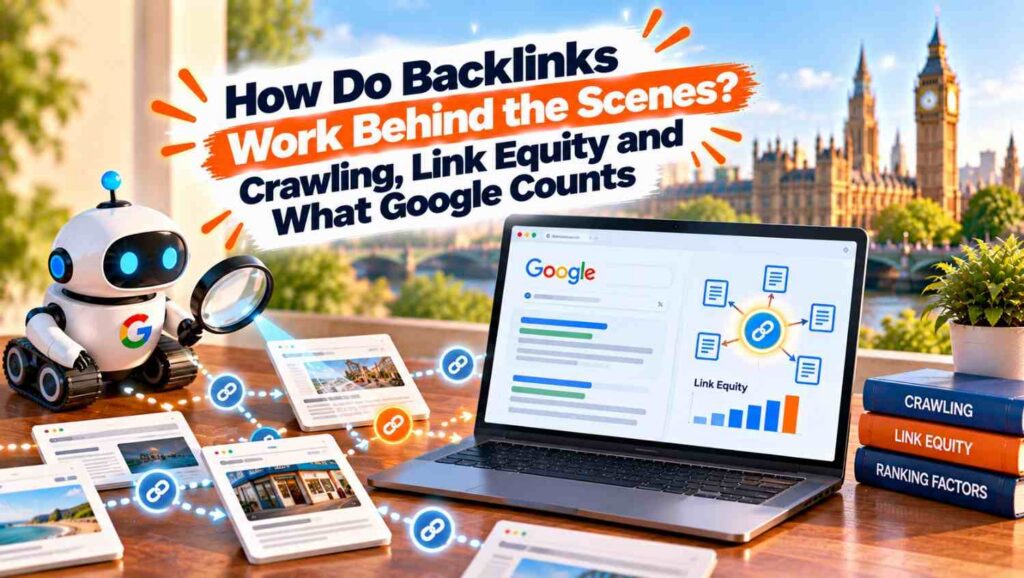
A backlink works in three steps. Google first has to find and crawl the link, then it treats the link as a vote of confidence from the linking page, and finally it weighs that vote by authority, relevance and placement. The result can help your page rank, though never on its own.

  • A backlink can only help if Google can discover and follow it, so crawlability comes first.
  • Links pass value, often called link equity, from the linking page to the page it points at.
  • How much value passes depends on the linking page’s authority, where the link sits, the surrounding content and the anchor text.
  • Google treats nofollow, sponsored and ugc attributes as hints, not strict blocks.
  • Google has not published the exact formula, so anything more specific than the principles is industry understanding, not confirmed fact.
  • You can see the links Google has found to your own site for free in Google Search Console.

Why This Guide Goes Deeper Than the Basics

If you want the plain English version of why links matter and how businesses earn them, start with our guide on how SEO backlinks work. This article looks under the bonnet instead, at what actually happens between a link being published and your page benefiting from it, because understanding the mechanics makes it much easier to spot a worthwhile link and a worthless one.

Step One: Google Has to Find the Link

A link nobody has crawled is a link that does not exist as far as search is concerned. According to Search Engine Land’s guide to link equity, search engines can only transfer equity through links they can discover and follow through crawling. In practice that means a link has to sit on a page Google can reach, and it needs to be a normal link in the page’s code rather than something hidden behind a script or a form.

This is why a link from a page that is blocked, or that never gets indexed, tends to do little. It is also why new links can take a while to show up in your reports.

Step Two: Value Flows From the Linking Page

Once Google has found the link, it treats it as a signal that the linking page is vouching for yours. The same guide describes the idea this way: if a trusted site links to your page, search engines like Google may view that backlink as a signal of quality. That passing of value is what people mean by link equity, a concept rooted in Google’s original PageRank idea.

One honest caveat is worth stating. Google has not confirmed the exact calculations behind how this works today, so treat any tool score or neat formula as an industry estimate rather than something Google itself publishes.

Step Three: What Changes How Much a Link Is Worth

Not every link carries the same weight, and four factors come up repeatedly in credible guides.

The first is the authority of the linking page, since a page can only pass on the value it has. The second is placement, because links in the main content area are generally treated as stronger votes than those buried in footers or sidebars. The third is context, where an editorial link inside relevant content signals more than a navigational or promotional one. The fourth is anchor text, which helps search engines understand what the destination page is about. All four are described in the Search Engine Land guide, and together they explain why one link from a relevant, trusted article can outweigh dozens from irrelevant directories.

Nofollow, Sponsored and UGC: Hints, Not Walls

Webmasters can add attributes to a link to tell Google how to treat it. Google’s own documentation on qualifying outbound links says sponsored should be used for advertisements and paid placements, ugc for user generated content such as comments and forum posts, and nofollow when you would rather Google not associate your site with the linked page. Google treats all three as hints, and notes that the linked pages may still be found through other means.

For your purposes, this means paid or user generated links are not worthless, but they should not be counted on to move rankings. It also explains why paying for links that are not properly marked can land a site in trouble, a risk we explain in our article on whether you should buy backlinks.

What Backlinks Cannot Do on Their Own

A strong link profile will not rescue thin content, a slow site or a page that does not match what searchers want. Links amplify a page that already deserves to rank, which is why they work best alongside good content and a sound site, and why timelines are measured in months, as we explain in our guide to how long SEO takes to show results.

How to See Your Own Backlinks

The simplest starting point is the Links report in Google Search Console, which lists the external sites linking to you and your most linked pages. Look for links from relevant, real sites, check that your best pages are the ones attracting them, and notice anything that looks like spam. If you do find a problem, our guide on how to audit and clean up a bought link profile walks through what to do before you touch the disavow tool.

Turning the Mechanics Into a Plan

Once you understand the three steps, the strategy follows naturally. Aim for links on crawlable, indexed, relevant pages, in editorial positions, with natural anchor text. Our guide to SEO backlink services in Kent shows what that looks like in practice, and our SEO backlinks service is built around exactly these principles.

Examples

These are illustrative scenarios rather than client case studies, but they show how the mechanics play out.

  • A local electrician earned a link from a regional business news article. Because the article was indexed, relevant and placed in the main text, the link was found quickly and carried real weight, while a footer link from an unrelated directory did very little.
  • A shop owner paid for a batch of links on a network of pages that Google never indexed. The links looked impressive in a spreadsheet, but because they were not crawled, they passed nothing at all.
  • A consultant checked Google Search Console and found that most of their links pointed at an old blog post rather than their service page. By adding a clear internal link from the blog post to the service page, they helped pass some of that value where it mattered.

Ready to Build Links That Actually Count

Knowing how links work makes it much easier to invest in the ones that matter and avoid the ones that do not. At Atomic Artisans we build white hat link campaigns around your market through our SEO backlinks service. Take a look at our pricing, book a call with our team, or get in touch through our contact page to get started.

Atomic Artisans Team

October 6, 2026

aeo seo

Agencia SEO Panamá

Agencia UGC Panamá

Agency vs In-House Marketing

AI content creation

AI content tools

AI content vs human content

AI Optimization

AI Overviews

AI Search

A backlink works in three steps. Google first has to find and crawl the link, then it treats the link as a vote of confidence from the linking page, and finally it weighs that vote by authority, relevance and placement. The result can help your page rank, though never on its own.

  • A backlink can only help if Google can discover and follow it, so crawlability comes first.
  • Links pass value, often called link equity, from the linking page to the page it points at.
  • How much value passes depends on the linking page’s authority, where the link sits, the surrounding content and the anchor text.
  • Google treats nofollow, sponsored and ugc attributes as hints, not strict blocks.
  • Google has not published the exact formula, so anything more specific than the principles is industry understanding, not confirmed fact.
  • You can see the links Google has found to your own site for free in Google Search Console.

Why This Guide Goes Deeper Than the Basics

If you want the plain English version of why links matter and how businesses earn them, start with our guide on how SEO backlinks work. This article looks under the bonnet instead, at what actually happens between a link being published and your page benefiting from it, because understanding the mechanics makes it much easier to spot a worthwhile link and a worthless one.

Step One: Google Has to Find the Link

A link nobody has crawled is a link that does not exist as far as search is concerned. According to Search Engine Land’s guide to link equity, search engines can only transfer equity through links they can discover and follow through crawling. In practice that means a link has to sit on a page Google can reach, and it needs to be a normal link in the page’s code rather than something hidden behind a script or a form.

This is why a link from a page that is blocked, or that never gets indexed, tends to do little. It is also why new links can take a while to show up in your reports.

Step Two: Value Flows From the Linking Page

Once Google has found the link, it treats it as a signal that the linking page is vouching for yours. The same guide describes the idea this way: if a trusted site links to your page, search engines like Google may view that backlink as a signal of quality. That passing of value is what people mean by link equity, a concept rooted in Google’s original PageRank idea.

One honest caveat is worth stating. Google has not confirmed the exact calculations behind how this works today, so treat any tool score or neat formula as an industry estimate rather than something Google itself publishes.

Step Three: What Changes How Much a Link Is Worth

Not every link carries the same weight, and four factors come up repeatedly in credible guides.

The first is the authority of the linking page, since a page can only pass on the value it has. The second is placement, because links in the main content area are generally treated as stronger votes than those buried in footers or sidebars. The third is context, where an editorial link inside relevant content signals more than a navigational or promotional one. The fourth is anchor text, which helps search engines understand what the destination page is about. All four are described in the Search Engine Land guide, and together they explain why one link from a relevant, trusted article can outweigh dozens from irrelevant directories.

Nofollow, Sponsored and UGC: Hints, Not Walls

Webmasters can add attributes to a link to tell Google how to treat it. Google’s own documentation on qualifying outbound links says sponsored should be used for advertisements and paid placements, ugc for user generated content such as comments and forum posts, and nofollow when you would rather Google not associate your site with the linked page. Google treats all three as hints, and notes that the linked pages may still be found through other means.

For your purposes, this means paid or user generated links are not worthless, but they should not be counted on to move rankings. It also explains why paying for links that are not properly marked can land a site in trouble, a risk we explain in our article on whether you should buy backlinks.

What Backlinks Cannot Do on Their Own

A strong link profile will not rescue thin content, a slow site or a page that does not match what searchers want. Links amplify a page that already deserves to rank, which is why they work best alongside good content and a sound site, and why timelines are measured in months, as we explain in our guide to how long SEO takes to show results.

How to See Your Own Backlinks

The simplest starting point is the Links report in Google Search Console, which lists the external sites linking to you and your most linked pages. Look for links from relevant, real sites, check that your best pages are the ones attracting them, and notice anything that looks like spam. If you do find a problem, our guide on how to audit and clean up a bought link profile walks through what to do before you touch the disavow tool.

Turning the Mechanics Into a Plan

Once you understand the three steps, the strategy follows naturally. Aim for links on crawlable, indexed, relevant pages, in editorial positions, with natural anchor text. Our guide to SEO backlink services in Kent shows what that looks like in practice, and our SEO backlinks service is built around exactly these principles.

Examples

These are illustrative scenarios rather than client case studies, but they show how the mechanics play out.

  • A local electrician earned a link from a regional business news article. Because the article was indexed, relevant and placed in the main text, the link was found quickly and carried real weight, while a footer link from an unrelated directory did very little.
  • A shop owner paid for a batch of links on a network of pages that Google never indexed. The links looked impressive in a spreadsheet, but because they were not crawled, they passed nothing at all.
  • A consultant checked Google Search Console and found that most of their links pointed at an old blog post rather than their service page. By adding a clear internal link from the blog post to the service page, they helped pass some of that value where it mattered.

Ready to Build Links That Actually Count

Knowing how links work makes it much easier to invest in the ones that matter and avoid the ones that do not. At Atomic Artisans we build white hat link campaigns around your market through our SEO backlinks service. Take a look at our pricing, book a call with our team, or get in touch through our contact page to get started.

Share this

whatsapp

Find out our more services

Is Your Business Invisible on AI Search?

Get a free audit of your website’s AI visibility, SEO health, and Google Business Profile — no strings attached.

Learn more

View Our Plans from $99/mo

Quick Fact Check

AI is expected to handle  25% of all global search queries by 2026
Businesses that optimise for AI now will have a 6–12 month head start over competitors.

Source: TheeDigital, Squarespace SEOSpace 2025

FAQ’s

Frequently Asked Questions 

atomic artisans logo

Privacy Overview

This website uses cookies so that we can provide you with the best user experience possible. Cookie information is stored in your browser and performs functions such as recognising you when you return to our website and helping our team to understand which sections of the website you find most interesting and useful.