


Focus on likes, clicks, and traffic without real business growth.

Result-driven
Digital marketing agency Plans starts - $100/mo
Powered by human intelligence with AI



Our Partners


Pricing That Fits Your Needs
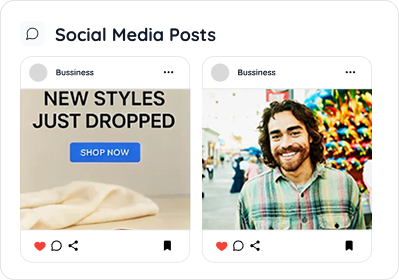
Social Media Posts
$500/mo
Short-Form Videos
$250/mo
Email Design
$250/mo
Meet the team
Consult with an expert
Launch your campaign
All services
Social media growth strategy
$100
Social media management
$125
UGC videos
$150
Ads management
$150/ad
Meta ads
$150/ad
Google ads
$150/ad
Local SEO
$500
Blog writing
$100/mo
$60
SEO backlinks
$249/mo
$500
All in one SEO
services
$249/mo
$800
Email marketing
$249/mo
$75
Website development
$249/mo
$500
Landing pages
$249/mo
$100
UI/UX design
$249/mo
$300
How it works
1
Select services
2
Onboarding
3
Account Manager Assigned

4
Collaboration

5
Delivery

6
Analytics
Industry-specific digital marketing
How we work vs. other agencies
Other agencies
Use generic templates with poor speed and outdated layouts.
Create generic content that brings little engagement or value.
Use outdated SEO tricks without adapting to Google updates.
Post content randomly without a proper engagement or branding plan.
Run ads with weak targeting that wastes advertising budget quickly.
Ignore landing page improvements and customer journey optimization.
Send confusing reports with too much data and no clear direction.
Features
Main Focus
Design & Development
Content Marketing
SEO Strategy
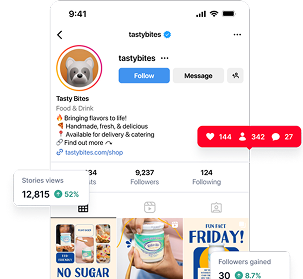
Social Media Management
Paid Ads
Conversion Optimization
Analytics & Reporting
Atomic Artisans
Focus on leads, sales, and measurable business growth that matters.
Build modern, fast, and conversion-focused websites for better user experience.
Create engaging content designed to educate, attract, and convert audiences.
Use smart SEO strategies focused on rankings, traffic, and long-term growth.
Build consistent social media strategies focused on reach and audience growth.
Create targeted ad campaigns optimized for conversions and better ROI.
Optimize websites and funnels to improve user actions and conversions.
Deliver easy-to-understand reports with clear insights and growth tracking.
What people say about us!
Digital Marketing Insights for Growing Businesses
SEO for Small Businesses: A Practical Guide to Getting Found Online
Most small business owners hear “SEO” and picture something built for companies with a marketing department and a six figure budget. It isn’t. Some of the best SEO opportunities actually favor small businesses, because you’re not trying to outrank Amazon for “shoes.” You’re trying to show up when someone nearby searches for exactly what you offer, and that’s a much smaller, more winnable fight.
- SEO can work faster and cheaper for small businesses than for large ones, since local and niche searches face far less competition.
- Start with your Google Business Profile before anything else — it often drives more visibility than website changes alone.
- Target narrow, specific keywords tied to your service and area rather than broad, competitive terms.
- Reviews and consistent, useful content compound over time and support both local and organic rankings.
- Expect a gradual build: modest visibility by month two or three, steadier leads by month six.
Why SEO Matters Even More for Small Businesses
If you’re weighing SEO against paid ads for a limited budget, our breakdown of where to spend your budget first, SEO or Google Ads covers that trade off in more depth. The short version: paid ads work, but they stop working the moment you stop paying. For a small business watching every dollar, that’s a real constraint. SEO is slower to build, but once a page starts ranking, it keeps bringing in customers without a per click cost attached to every visit.
There’s also a competitive angle most owners don’t think about. Larger companies often spread their SEO effort across broad, generic keywords. A small business can win by going narrower: a specific service, in a specific area, for a specific kind of customer. That’s exactly the kind of search Google is good at matching to a small, relevant business.
Where Small Business SEO Should Actually Start
- Claim and complete your Google Business Profile. This alone often does more for local visibility than anything else on this list. Fill in every field, add real photos, choose accurate categories, and keep your hours current. An abandoned profile with missing information quietly costs you customers before they even reach your website.
- Fix the basics on your website. A slow site, broken mobile layout, or missing page titles will hold back everything else you do. Google increasingly prioritizes sites that load fast and work well on phones, since that’s how most local searches happen.
- Target specific, realistic keywords. Skip broad terms like “plumber” and go after what your actual customers type, like “emergency plumber in [neighborhood]” or “same day plumbing repair near me.” These terms have less competition and much higher intent behind them.
- Ask for reviews, consistently. Reviews influence both your Google Maps ranking and whether someone actually picks you over the next result. A steady trickle of new reviews tends to help more than a big batch all at once.
- Publish content that answers real customer questions. A blog isn’t about publishing for the sake of it. It’s about answering the exact questions your customers already ask you on the phone or in person, so Google has a reason to show your site for those searches. Once you have content worth linking to, it also becomes easier to attract the kind of backlinks that actually influence rankings.
What Results Actually Look Like for a Small Business
For a fuller picture of the general timeline this follows, our guide on how long SEO takes to show results lays out what to expect month by month. Don’t expect a flood of traffic in month one. Realistic small business SEO usually looks like this: modest improvements in visibility around month two or three, a handful of specific searches you start ranking for by month four or five, and a steadier, more predictable stream of calls or inquiries by month six. It’s a slow build, not a light switch.
The upside is that once you’re ranking for the searches that matter to your business, that visibility tends to stick around with far less ongoing cost than paid advertising.
Common Mistakes Small Businesses Make with SEO
A lot of wasted effort comes down to a few repeatable mistakes: giving up after six or eight weeks because nothing dramatic happened yet, targeting keywords that are too broad and too competitive for a small budget, ignoring the Google Business Profile because the website feels like the “real” priority, and publishing content inconsistently instead of on a steady schedule.
None of these are complicated fixes. They just require knowing what to prioritize first, instead of trying to do everything at once with a limited budget. If you’d rather bring in outside help than sort priorities yourself, our guide on how to pick the right SEO agency for your business is a useful next read before you commit to anyone.
Examples
- A local locksmith stops targeting “locksmith” and shifts to “emergency locksmith [town],” and starts appearing in the local pack for exactly the searches that turn into same day callouts.
- A neighborhood bakery finally fills out its Google Business Profile completely, adding real photos and accurate hours, and sees a noticeable jump in “near me” traffic within a few weeks, before any website changes are made.
- An independent accounting firm publishes short, direct blog posts answering the exact questions new clients ask on discovery calls, and within six months those pages are driving a steady trickle of qualified leads.
- A small landscaping company budgets $800 a month for SEO rather than spreading that same amount across five unrelated marketing tactics, and sees faster, more measurable movement by staying focused on one channel.
Get an SEO Plan That Fits a Small Business Budget
You don’t need an enterprise sized budget to get real results from SEO. Book a call with us and we’ll show you exactly where to start based on your business, your competition, and what you can realistically invest right now.
You can also take a look at our pricing to see what’s included at every level.
Why Did My Google Rankings Suddenly Drop?
A sudden drop in Google rankings is usually caused by one of five things: a core algorithm update, a technical fault such as a broken page or an accidental noindex tag, lost backlinks, a manual action for violating Google’s guidelines, or a competitor simply outranking you with stronger content. Check Google Search Console first, since it will often tell you exactly which of these applies.
- Confirm it is a real drop and not a tracking or seasonal blip before you panic.
- Check Google Search Console for manual actions, security issues, and indexing errors.
- Compare the drop date against Google’s confirmed core update rollout dates.
- Test whether key pages are still live, fast, and free of accidental noindex tags.
- Review your backlink profile for links that were removed or disavowed by mistake.
- Look at what is now ranking above you, since it often points to the real cause.
Start With What’s Actually Changed Recently
Before you assume the worst, it helps to read up on what has changed recently across search more broadly — the Atomic Artisans blog is a good place to start, since sudden ranking drops almost always trace back to one of a small number of causes. The good news is that most drops are diagnosable within an hour if you work through the right checklist in order, rather than guessing.
Confirm the Drop Is Real
Check your rank tracker and Google Search Console’s Performance report over a rolling 28 day window rather than trusting a single day’s snapshot, since normal fluctuation can look alarming day to day. Google’s own guide to debugging search traffic drops recommends comparing like for like periods, filtering by query and page, and ruling out seasonal demand before assuming something is broken. If the drop is limited to a handful of keywords rather than the whole site, that already narrows the likely cause considerably.
The Five Most Common Causes
| Cause | How to Confirm It | Typical Recovery Time |
|---|---|---|
| Core algorithm update | Check the Google Search Status Dashboard against your drop date | Weeks to months of genuine improvement |
| Technical fault | Test the page directly; check for noindex, robots.txt, or canonical issues | One to three weeks after the fix |
| Lost or devalued backlinks | Review your backlink profile for links removed around the drop date | Varies with how quickly links are replaced |
| Manual action or penalty | Check Security and Manual Actions in Search Console | After the issue is fixed and reconsideration is granted |
| Stronger competition | Search the dropped terms and review what now outranks you | Ongoing, tied to your own content improvements |
A Google Core Update
Google rolls out broad core updates several times a year, most recently in March 2026 and again in May 2026, and each one reassesses how pages are evaluated for quality and relevance. Check the Google Search Status Dashboard to see whether an update was rolling out on the date your traffic changed. If so, the fix is rarely a quick technical tweak; it usually means genuinely improving content depth, accuracy, and trustworthiness over the following weeks.
A Technical Fault
If you suspect a technical cause, our guide on why a website stops showing up on Google walks through the same class of issues in more depth. Look at your pricing and service pages as an example of pages worth checking first, since high value pages are often the ones accidentally broken during a routine update. Common culprits include a page returning an error instead of loading, an accidental noindex tag left over from a staging site, a blocked robots.txt rule, a broken canonical tag, or a site speed regression after a plugin or theme update. These issues are usually the fastest to find and the fastest to fix once spotted.
Lost or Devalued Backlinks
If backlinks are the suspected cause, it helps to first understand how backlinks actually influence rankings before deciding this is the problem. Review your backlink profile in a tool such as Ahrefs or Moz’s Link Explorer for links that disappeared around the time of the drop. Sites sometimes remove old guest posts, redesign without preserving links, or a previous agency disavows links incorrectly. Losing a handful of strong, relevant links can measurably affect rankings for competitive terms.
A Manual Action or Algorithmic Penalty
Open the Security and Manual Actions section inside Google Search Console. A manual action means a human reviewer at Google has flagged something, commonly unnatural links, thin or duplicated content, or cloaking, and it will usually name the exact issue along with a path to request reconsideration once it is fixed.
Stronger Competition
Before assuming your own site broke, it’s worth reading our take on why a competitor might be ranking above you even though your website is better, since a ranking loss often turns out to be a competitor publishing a more thorough, better structured, or more recently updated page rather than anything going wrong on your own site. Our portfolio of past client work shows this pattern play out repeatedly. Sometimes the fix is not repair work at all; it is simply raising the bar on the page in question.
How to Diagnose It Step by Step
Start in Google Search Console, since it is free, official, and usually the fastest route to an answer. Check the Performance report for the exact date and pages affected, check Coverage for new indexing errors, check Security and Manual Actions for penalties, and check whether the timing lines up with a confirmed core update. From there, test the affected pages directly in a browser, review recent changes to the site, and check your backlink profile last, since it usually takes longest to investigate and is the least common cause.
Examples
- A regional law firm saw its enquiry page drop from position three to position eleven overnight. The cause turned out to be a developer accidentally leaving a noindex tag on the page after a routine content update, and rankings recovered within two weeks of removing it.
- An online furniture retailer lost roughly a third of its organic traffic during a confirmed core update. Rather than making rushed changes, the team spent six weeks improving product descriptions, adding genuine customer photos, and removing thin category pages, and traffic recovered and then exceeded its previous level by the next update cycle.
- A local dental practice noticed rankings falling for its main treatment pages. A quick backlink audit showed that a business directory the practice relied on for several links had shut down entirely, removing that authority overnight. Rebuilding a handful of local citations restored most of the lost visibility.
Ready to Get Your Rankings Back on Track?
A sudden ranking drop is stressful, but it is almost always explainable once you work through the checklist in the right order. At Atomic Artisans, we run this exact diagnostic process for clients every week, from confirming the cause to building the recovery plan that follows it. Take a look at our pricing or schedule a call with our team, and we will help you find out exactly what changed and how to fix it.
How to Pick the Right SEO Agency for Your Business?
The right SEO agency is transparent about its process, shows real case studies and measurable results, uses white hat methods that follow Google’s own guidelines, communicates clearly on a set schedule, and prices its work around your goals rather than a generic package. Before you sign anything, ask for references, a sample audit, and a clear reporting plan.
- Look for proven results backed by real case studies and client references
- Confirm the agency only uses white hat techniques that follow Google’s guidelines
- Ask how success will be measured: rankings, organic traffic, leads, or revenue
- Check the communication style and reporting frequency before you sign anything
- Compare pricing against the full scope of work, not just the monthly fee
- Choose a partner who understands your industry and your local market
Why the right SEO agency matters
As covered on the Atomic Artisans blog, search engine optimisation is one of the few marketing channels that keeps paying off long after the invoice is settled. A page that ranks well can bring in enquiries and sales for years, while a poorly optimised site can sit invisible on page five of Google no matter how much you spend elsewhere. That is exactly why the choice of agency matters so much. According to Google’s own guide for site owners considering outside help, a good SEO can be an integral part of your marketing, but a poor one can actively damage your site’s visibility. Picking the wrong partner does not just waste your budget, it can undo months of progress and take even longer to fix.
Define your goals before you start looking
Before you request a single proposal, browse a few agency service and pricing pages to see how offers are usually structured, then get clear on what success looks like for your own business. Are you trying to rank for competitive national keywords, dominate a local area, launch a new product line, or simply stop losing customers to a faster competitor? A clothing retailer chasing online sales needs a very different strategy from a solicitor trying to win enquiries from one postcode. Writing this down first means you can judge every agency against the same yardstick instead of being swayed by whoever gives the most polished pitch.
What to look for in an SEO agency
A genuine track record
Browse the agency’s portfolio of past work and ask for case studies, not just testimonials. A trustworthy agency should be able to show you real ranking improvements, traffic growth, and, where possible, the commercial outcome behind those numbers. If they cannot point to actual client results, treat that as a warning sign rather than an oversight.
Transparent, white hat methods
SEO is built on trust with search engines as much as with customers. Reputable agencies follow the practices outlined in Moz’s Beginner’s Guide to SEO, one of the most widely cited references in the industry, and avoid shortcuts such as bought links, hidden text, or content spun purely for keywords. Ask directly how they build links and who writes the content. If the answer is vague, keep asking.
Clear reporting and honest communication
You should never have to chase your agency to find out what is happening with your own website. Look for a partner who sends regular reports, explains what the numbers mean in plain English, and is upfront when something is not working. Review platforms such as Clutch can be useful here, since they collect verified client feedback about exactly this kind of working relationship.
Industry and local market experience
Read the agency’s about page to see which sectors it actually works in, since an agency that has already worked in your sector understands the search behaviour, seasonality, and competition you are up against. If most of your customers come from a specific city or region, ask how the agency approaches local search, citations, and Google Business Profile optimisation, since these differ significantly from a purely national campaign.
Realistic timelines
SEO is not a switch you flip. Meaningful, durable results typically take three to six months to appear and continue building from there. Any agency promising results within days or guaranteeing a specific ranking is either inexperienced or planning to use tactics that put your site at risk once Google notices.
Fair pricing tied to scope
Cheap SEO is rarely good SEO, and expensive SEO is not automatically effective either. Ask exactly what is included for the price: how many hours of work, how much content, how many links, and how often you will meet. A clear scope protects both sides and makes it easy to compare quotes fairly.
Questions to ask before you sign
When you schedule a call with a prospective agency, bring a short list of direct questions to that discovery call. Useful ones include: which tools do you use to track rankings and traffic, can you share three client references I can contact myself, what happens if we want to pause or leave the contract, and who on your team will actually be working on my account day to day. The quality and confidence of the answers will tell you almost as much as the answers themselves.
Red flags to avoid
Walk away from any agency that guarantees a number one ranking, refuses to explain its methods, buys links in bulk, or asks for access to your website without a written agreement in place. These are the classic signs of an agency chasing short term wins at the expense of your site’s long term health and your relationship with search engines.
Examples
A local bakery hired an agency that promised page one rankings within two weeks. The agency built hundreds of low quality links overnight, and within a month the bakery’s site had lost most of its existing rankings after a Google penalty. It took six months of cleanup work with a new, more careful agency to recover.
An online homeware store instead chose an agency that started with a full technical audit, a content plan mapped to real customer questions, and monthly reports in plain language. Organic traffic grew steadily over the following year, and the store now generates a meaningful share of revenue from search rather than paid ads alone.
A regional accountancy firm chose a partner with direct experience in professional services and local search. The agency optimised the firm’s Google Business Profile, built genuine local citations, and produced helpful guides answering common client questions. Enquiries from search grew consistently, and the firm no longer depends on expensive sponsorships to be found locally.
Ready to find the right SEO partner?
Choosing an SEO agency is a decision that shapes your visibility for years, so it is worth taking the time to get right. At Atomic Artisans, we are upfront about our process, share real results from past client work in our portfolio, and build every plan around your goals rather than a one size fits all package. Take a look at our pricing or schedule a call with our team to talk through what the right SEO strategy could look like for your business, or reach out any time through our contact page.
Frequently asked questions
1. Can you guarantee results?
No, agency can honestly guarantee specific rankings or revenue numbers — and any that do should raise a red flag.
What we do guarantee:
- A strategy built on real data and your specific goals
- Full transparency on what we’re doing and why, every single month
- A team that identifies what’s working, what isn’t, and adjusts accordingly
We set clear, measurable targets at the start of every engagement and report against them consistently. You’ll never be left wondering where things stand.
2. I've worked with agencies before and seen nothing. Why would this be different?
It’s the most common thing we hear. In most cases it came down to one of three things: the strategy wasn’t built around the actual business goals, the reporting was too vague to understand what was happening, or unrealistic promises were made just to win the contract.
At Atomic Artisans, we’re direct about what’s achievable and over what timeline — before you sign anything. You’ll see exactly what we’re doing, what it’s producing, and what we’re changing when it isn’t.
Book a discovery call and we’ll walk you through how we work.
3. What's the difference between SEO and paid advertising - and which one do I need?
SEO builds your visibility in search engines organically. It takes longer – typically 3 to 6 months before meaningful movement – but it compounds over time and doesn’t stop the moment you stop paying.
Paid advertising (Google, Meta, TikTok, LinkedIn) delivers results immediately. When the budget stops, so does the traffic.
Most businesses benefit from both: paid ads for short-term lead flow while SEO builds long-term, sustainable growth. During your discovery call, we’ll tell you what the right mix looks like for your specific situation – not recommend both by default just to increase the invoice.
4. Do I need a big budget to work with you?
No, We work with businesses at different stages and budget levels.
What matters more than the size of the budget is being honest about what you’re working with – so we can build a strategy that uses it properly rather than spreading it too thin. During your discovery call, we’ll tell you what’s realistically achievable and where we’d recommend starting first.
5. How involved do I need to be once we get started?
As much or as little as works for you.
Some clients review every piece of content before it goes live. Others agree on the strategy and let us run with it. We settle on a communication rhythm that suits you during onboarding – you’re not forced into weekly calls you don’t need.
What we’ll always need: timely responses when we ask for feedback, and access to the platforms and assets we need to do the work properly.
6. Do I own everything you create for me?
Yes, everything. Every piece of content, ad creative, copy, design, and website work we produce for your business belongs to you.
You’re not renting assets or locked into a proprietary platform. If you ever move on, you take everything with you – no questions asked.
7. My website already exists. Can you just handle the marketing?
Yes, You don’t need to rebuild or redesign your website before working with us.
We’ll review what’s there and flag anything that could hold back your marketing or SEO performance – but that’s a conversation, not a condition to get started. We kick off the marketing straight away and only raise website issues when they’re genuinely affecting results.
8. How much of my time will this take each week?
Very little once onboarding is done.
The onboarding stage requires more from you: briefing calls, a questionnaire, and sharing platform access. After that, the execution is on us. Most clients spend around 30 to 60 minutes a week reviewing updates, approving content, or answering occasional questions from the team.
We work around your schedule, not the other way around.
9. Do you work in specific industries?
We don’t limit ourselves to one sector. We’ve worked across e-commerce, professional services, hospitality, health and wellness, retail, and B2B.
The fundamentals of strong digital marketing apply across industries – what changes is how we apply them. Before recommending anything, we research your specific market, search landscape, and competitors.
10. What do you need from me before we can begin?
Nothing you need to prepare in advance. We walk you through everything in a structured onboarding questionnaire.
Typically we’ll need:
- Access to your platforms (Google, Meta, your website)
- Your business goals and target audience
- Key competitors you’re aware of
- Any existing brand assets – logos, photography, brand guidelines
We make onboarding straightforward so you’re not spending hours on admin before anything gets started.
11. How do I get started?
Book a free discovery call through our website. We’ll learn about your business, your goals, and what you’ve already tried.
From there, we’ll put together a clear proposal – scope, deliverables, and cost, with nothing hidden. Once you’re happy, we kick off onboarding and get to work.