Opens in a new tab
Atomic Logo
ecommerce seo uk

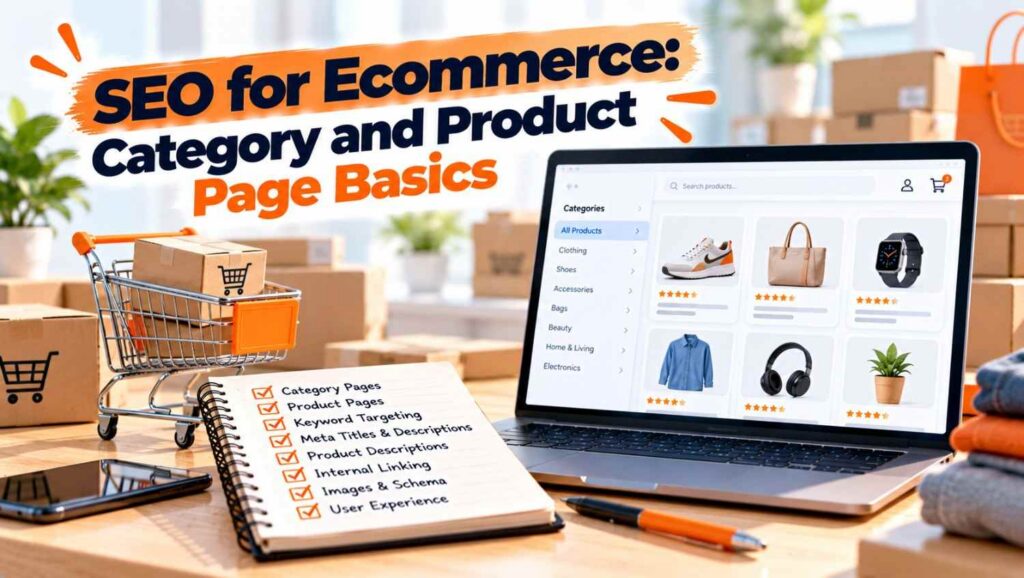
SEO for Ecommerce: Category and Product Page Basics

Ecommerce SEO UK shops need starts with a clear structure: menus link to categories, categories to subcategories, and subcategories to products. Give each page a unique title, description and helpful copy, keep one crawlable URL per page, handle filters and variants carefully, and add Product structured data that matches what shoppers see.

  • Ecommerce SEO UK retailers can rely on starts with category pages, because they usually target broader, higher value searches than single products
  • Google recommends linking from menus to categories, subcategories and then products, and linking to every product you want indexed
  • Unique product copy matters because manufacturer text is shared by every retailer selling the item
  • Filter and sort pages can create duplicate lists, so Google suggests blocking them with noindex or robots.txt
  • Product structured data helps Google understand each product, but it must describe the page honestly
  • Word counts and click depth rules in agency guides are opinions, not Google requirements

What ecommerce SEO UK shops need to get right

Our guide to SEO for small businesses covers the general principles, and an online shop adds two extras: lots of similar pages and lots of URLs. Ecommerce SEO UK retailers need to get structure right first, because products Google cannot find cannot rank.

Google’s ecommerce site structure advice says to link from menus to category pages and from categories to subcategories, and to link to every product you want indexed. It adds that products reachable only through site search may be missed, because Googlebot generally does not submit searches. It infers importance from how many links lead to a page and how many clicks it takes to reach it.

Ecommerce SEO UK category page basics

Our post on what SEO is and how it works explains why pages should match search intent, and category pages are where most shops win or lose. Start each one with a short helpful introduction. ProfileTree suggests 80 to 150 words above the product grid, while Anicca Digital suggests an intro or buying guide, and both figures are agency opinions.

Link each category to its subcategories and best sellers, and add breadcrumbs, as Anicca recommends. For long lists, Google’s pagination advice says to give each page its own URL and its own canonical, link pages with normal anchor tags, and not rely on rel next and rel prev, which Google no longer uses. Make load more buttons crawlable too.

For filters, Google suggests blocking sort and filter variations such as price order with noindex or robots.txt to avoid indexing duplicate lists. ProfileTree defaults to noindex for price, availability and sort filters, and suggests judging colour, size and brand filters against search data.

Ecommerce SEO UK product page basics

Our guide to why a site might not show on Google lists indexing problems, and product pages often suffer from them. Write original descriptions, because copying manufacturer text gives Google no reason to prefer your page over other sellers of the same item, as ProfileTree points out. Anicca suggests 200 to 300 words where a product warrants it, which is its own guideline.

Answer the questions a shopper would ask in person, such as what it does, who it suits and how this version differs. Add descriptive file names and specific alt text to images, as Google’s image advice recommends.

Show reviews as real text on the page, not loaded in after the fact, as ProfileTree advises. Keep out of stock pages live where the product may return, because deleting them creates 404 errors, as Anicca notes. Google says URLs returning 404 are removed from the index.

Variants, URLs and structured data

Our website development service often fixes shop URL problems, and Google’s ecommerce URL guidance is the reference point. It says to avoid unnecessary or temporary parameters such as session IDs, use the same URL in links, sitemaps and canonicals, and give each page a self referencing canonical.

For variants such as size or colour, Google says each can have its own URL, and where a query parameter identifies the variant the canonical can omit it or point to the main product. ProfileTree prefers one canonical page unless a variant has its own search demand.

For ecommerce SEO UK retailers, Google’s product pages describe Product and ProductGroup markup that tells Google more about your products, and recommends providing as much rich product information as available. Many platforms offer plugins that add it, and Google recommends structured data for Merchant Center too. Check the markup matches what visitors see.

UK details worth adding

Our guide to how SEO backlinks work explains how links from other sites build trust, and on your own site the equivalent is clear policies. ProfileTree suggests setting out delivery terms separately for Northern Ireland, Great Britain and the Republic of Ireland. Use the words UK shoppers use, such as trainers rather than sneakers, which follows Google’s advice to think about the terms different people search with. Ecommerce SEO UK shops also benefit from honest photography and clear returns information, which reassure shoppers before they buy.

Ecommerce SEO UK cost and timing

Our guide to how much SEO costs notes that ecommerce SEO costs more than local SEO, and how long SEO takes says competitive campaigns can take six to twelve months or longer. ProfileTree estimates three to six months for established stores and up to twelve for new or migrated domains, which is its author’s estimate. If you need help, our SEO services cover shops.

Examples

These are illustrative scenarios rather than client case studies, but they show how ecommerce SEO UK work tends to play out.

A homeware shop copied supplier descriptions across two hundred products. It rewrote its best sellers first with sizes, uses and care advice, which gave each page something unique to say.

A clothing store let every colour and sort option create an indexable page. It blocked sort pages and canonicalised colour variants, which cut the number of near duplicate URLs.

A garden shop deleted out of stock product pages each season. It kept the pages live with a clear message and links to similar items, avoiding repeated 404 errors.

Ready to improve your shop’s SEO

Strong foundations make every product easier to find and buy. At Atomic Artisans we help online shops with ecommerce SEO UK retailers can build on, through our SEO services. Take a look at our pricing, book a call with our team, or get in touch through our contact page to get started.

Atomic Artisans Team

October 22, 2026

aeo seo

Agencia SEO Panamá

Agencia UGC Panamá

Agency vs In-House Marketing

AI content creation

AI content tools

AI content vs human content

AI Optimization

AI Overviews

AI Search

Ecommerce SEO UK shops need starts with a clear structure: menus link to categories, categories to subcategories, and subcategories to products. Give each page a unique title, description and helpful copy, keep one crawlable URL per page, handle filters and variants carefully, and add Product structured data that matches what shoppers see.

  • Ecommerce SEO UK retailers can rely on starts with category pages, because they usually target broader, higher value searches than single products
  • Google recommends linking from menus to categories, subcategories and then products, and linking to every product you want indexed
  • Unique product copy matters because manufacturer text is shared by every retailer selling the item
  • Filter and sort pages can create duplicate lists, so Google suggests blocking them with noindex or robots.txt
  • Product structured data helps Google understand each product, but it must describe the page honestly
  • Word counts and click depth rules in agency guides are opinions, not Google requirements

What ecommerce SEO UK shops need to get right

Our guide to SEO for small businesses covers the general principles, and an online shop adds two extras: lots of similar pages and lots of URLs. Ecommerce SEO UK retailers need to get structure right first, because products Google cannot find cannot rank.

Google’s ecommerce site structure advice says to link from menus to category pages and from categories to subcategories, and to link to every product you want indexed. It adds that products reachable only through site search may be missed, because Googlebot generally does not submit searches. It infers importance from how many links lead to a page and how many clicks it takes to reach it.

Ecommerce SEO UK category page basics

Our post on what SEO is and how it works explains why pages should match search intent, and category pages are where most shops win or lose. Start each one with a short helpful introduction. ProfileTree suggests 80 to 150 words above the product grid, while Anicca Digital suggests an intro or buying guide, and both figures are agency opinions.

Link each category to its subcategories and best sellers, and add breadcrumbs, as Anicca recommends. For long lists, Google’s pagination advice says to give each page its own URL and its own canonical, link pages with normal anchor tags, and not rely on rel next and rel prev, which Google no longer uses. Make load more buttons crawlable too.

For filters, Google suggests blocking sort and filter variations such as price order with noindex or robots.txt to avoid indexing duplicate lists. ProfileTree defaults to noindex for price, availability and sort filters, and suggests judging colour, size and brand filters against search data.

Ecommerce SEO UK product page basics

Our guide to why a site might not show on Google lists indexing problems, and product pages often suffer from them. Write original descriptions, because copying manufacturer text gives Google no reason to prefer your page over other sellers of the same item, as ProfileTree points out. Anicca suggests 200 to 300 words where a product warrants it, which is its own guideline.

Answer the questions a shopper would ask in person, such as what it does, who it suits and how this version differs. Add descriptive file names and specific alt text to images, as Google’s image advice recommends.

Show reviews as real text on the page, not loaded in after the fact, as ProfileTree advises. Keep out of stock pages live where the product may return, because deleting them creates 404 errors, as Anicca notes. Google says URLs returning 404 are removed from the index.

Variants, URLs and structured data

Our website development service often fixes shop URL problems, and Google’s ecommerce URL guidance is the reference point. It says to avoid unnecessary or temporary parameters such as session IDs, use the same URL in links, sitemaps and canonicals, and give each page a self referencing canonical.

For variants such as size or colour, Google says each can have its own URL, and where a query parameter identifies the variant the canonical can omit it or point to the main product. ProfileTree prefers one canonical page unless a variant has its own search demand.

For ecommerce SEO UK retailers, Google’s product pages describe Product and ProductGroup markup that tells Google more about your products, and recommends providing as much rich product information as available. Many platforms offer plugins that add it, and Google recommends structured data for Merchant Center too. Check the markup matches what visitors see.

UK details worth adding

Our guide to how SEO backlinks work explains how links from other sites build trust, and on your own site the equivalent is clear policies. ProfileTree suggests setting out delivery terms separately for Northern Ireland, Great Britain and the Republic of Ireland. Use the words UK shoppers use, such as trainers rather than sneakers, which follows Google’s advice to think about the terms different people search with. Ecommerce SEO UK shops also benefit from honest photography and clear returns information, which reassure shoppers before they buy.

Ecommerce SEO UK cost and timing

Our guide to how much SEO costs notes that ecommerce SEO costs more than local SEO, and how long SEO takes says competitive campaigns can take six to twelve months or longer. ProfileTree estimates three to six months for established stores and up to twelve for new or migrated domains, which is its author’s estimate. If you need help, our SEO services cover shops.

Examples

These are illustrative scenarios rather than client case studies, but they show how ecommerce SEO UK work tends to play out.

A homeware shop copied supplier descriptions across two hundred products. It rewrote its best sellers first with sizes, uses and care advice, which gave each page something unique to say.

A clothing store let every colour and sort option create an indexable page. It blocked sort pages and canonicalised colour variants, which cut the number of near duplicate URLs.

A garden shop deleted out of stock product pages each season. It kept the pages live with a clear message and links to similar items, avoiding repeated 404 errors.

Ready to improve your shop’s SEO

Strong foundations make every product easier to find and buy. At Atomic Artisans we help online shops with ecommerce SEO UK retailers can build on, through our SEO services. Take a look at our pricing, book a call with our team, or get in touch through our contact page to get started.

Share this

whatsapp

Find out our more services

Is Your Business Invisible on AI Search?

Get a free audit of your website’s AI visibility, SEO health, and Google Business Profile — no strings attached.

Learn more

View Our Plans from $99/mo

Quick Fact Check

AI is expected to handle  25% of all global search queries by 2026
Businesses that optimise for AI now will have a 6–12 month head start over competitors.

Source: TheeDigital, Squarespace SEOSpace 2025

FAQ’s

Frequently Asked Questions 

atomic artisans logo
Privacy Overview

This website uses cookies so that we can provide you with the best user experience possible. Cookie information is stored in your browser and performs functions such as recognising you when you return to our website and helping our team to understand which sections of the website you find most interesting and useful.