Opens in a new tab
Atomic Logo
nofollow vs dofollow

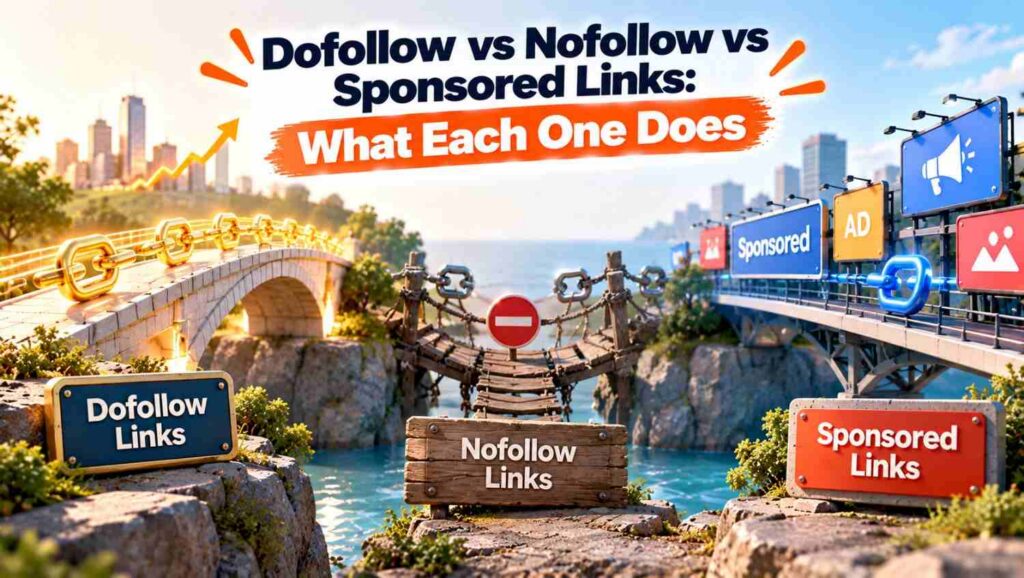
Dofollow vs Nofollow vs Sponsored Links: What Each One Does

The nofollow vs dofollow difference is simple: a dofollow link is an ordinary link with no rel attribute, while a nofollow link carries rel=”nofollow” to say you do not vouch for the page. Google also offers sponsored for paid links and ugc for user content, and treats all three labels as hints.

  • Nofollow vs dofollow comes down to whether a link has a rel attribute, because “dofollow” is just the name people give to a normal link
  • Google gives you three labels: nofollow, sponsored and ugc
  • Sponsored is the preferred label for paid links, and ugc is for comments and forum posts
  • Google treats these labels as hints, and has not published exactly how much weight each link type carries
  • Buying or selling links is acceptable to Google only when they are qualified with nofollow or sponsored
  • You can check any link in seconds by viewing the page source

Nofollow vs dofollow: what the two terms mean

Our guide to how SEO backlinks work introduces links as votes of trust, and the nofollow vs dofollow split describes whether a link is labelled in a way that asks search engines to treat that vote differently. A dofollow link is simply a normal link. Mangools points out that no attribute called dofollow actually exists, so there is nothing to add to your code.

A nofollow link carries rel=”nofollow” in its HTML tag. According to Google’s documentation on qualifying outbound links, regular links need no rel attribute, and nofollow signals that you would rather not associate your site with the linked page, or have Google crawl it from your site.

Our post on how backlinks work behind the scenes explains how Google treats these labels as hints. According to SE Ranking’s summary, Google introduced sponsored and ugc in September 2019 and began using nofollow as a hint for crawling and indexing from March 2020.

Sponsored is for advertisements and paid placements, and Google says it is preferred over nofollow for those links, although nofollow is still acceptable. Ugc is for user generated content such as comments and forum posts, and Google says you can remove it for members who have contributed high quality content over time. You can also combine values, for example rel=”ugc nofollow”.

Does nofollow vs dofollow matter for SEO?

Our post on whether you should buy backlinks shows where labelling matters most, but the wider question is how much each type counts. Google has not published exact weightings, so any claim that nofollow links are worthless, or that they secretly boost rankings, goes beyond the evidence.

Industry sources disagree. Mangools describes nofollow links as having very little SEO value while crediting them with referral traffic and brand exposure, and SE Ranking’s article says both that nofollow links have no SEO value and that Google may count them. Neither gives data.

Many tools also say a natural profile contains a mix of both types, but that is a rule of thumb, not a Google statement. Judge a link by relevance, audience and trust, not by its label alone.

When to use each: nofollow vs dofollow on your own site

Our guide to guest posting covers the outbound side of link building, and the table below applies the same logic to links you publish yourself.

SituationLabel to use
Editorial link to a source you trustNone (a normal link)
Internal link to your own pageNone
Advertisement, paid placement or sponsored postsponsored (or nofollow)
Affiliate linksponsored (or nofollow)
Comment or forum linkugc (or nofollow)
Link to a page you do not want to vouch fornofollow

Mangools suggests most internal links should be plain. For stricter control over crawling, Google recommends a robots.txt rule instead of nofollow on internal links.

Checking nofollow vs dofollow status is quick, and it matters most when an agency reports placements, as our guide to choosing a white hat link building agency explains. Mangools suggests two simple methods: press Ctrl+U to view the page source, or right click and choose Inspect, then find the link and look for a rel attribute.

If the link has no rel attribute, it is a normal link. For many links at once, Mangools names tools such as Screaming Frog and its own browser extension. A page can also carry a robots meta tag with nofollow, which applies to every link on it, so check the page head too.

Our SEO backlinks service is built around earning links that are editorial, relevant and honestly labelled. Google’s spam policies say buying and selling links is a normal part of advertising, and is not a violation when the links are qualified with nofollow or sponsored.

The same policies list buying links for ranking purposes, and advertorials or guest posts that pass ranking credit or use optimised anchor text, as link spam. Anyone selling you paid dofollow links is therefore selling something Google lists as a violation. Our post on cleaning up bought backlinks covers what to do if that has already happened.

A nofollow link can still be worth earning. Coverage from digital PR may carry either label, and the value includes visibility and trust as well as the link itself.

Our guide to SEO for small businesses stresses keeping the basics clean, and four mistakes come up again and again. The first is adding rel=”dofollow”, which is not a real attribute. The second is nofollowing every outbound link out of fear, including genuine sources you are happy to cite.

The third is leaving paid or affiliate links unlabelled, which risks falling foul of Google’s link spam rules. The fourth is judging a link only by whether it is dofollow, and ignoring whether the site is relevant and the audience real.

Examples

These are illustrative scenarios rather than client case studies, but they show how the labels work in practice.

A bakery sponsored a local charity run, and the event page linked back to its website. The organiser marked the link as sponsored, which kept the arrangement within Google’s rules while still giving visitors a route to the site.

A blogger received a free product to review and linked to the seller. Because Google’s policies list sending a product in return for a write up with a link as link spam, she marked the link sponsored.

A plumber answered questions on a local forum and included a link to a helpful guide. The forum added ugc to the link, so it brought interested visitors rather than any expectation of ranking credit.

Knowing the nofollow vs dofollow difference helps you decide which links are worth earning and how to label the ones you publish. At Atomic Artisans we build honest, editorial links through our SEO backlinks service. Take a look at our pricing, book a call with our team, or get in touch through our contact page to get started.

Atomic Artisans Team

October 14, 2026

aeo seo

Agencia SEO Panamá

Agencia UGC Panamá

Agency vs In-House Marketing

AI content creation

AI content tools

AI content vs human content

AI Optimization

AI Overviews

AI Search

The nofollow vs dofollow difference is simple: a dofollow link is an ordinary link with no rel attribute, while a nofollow link carries rel=”nofollow” to say you do not vouch for the page. Google also offers sponsored for paid links and ugc for user content, and treats all three labels as hints.

  • Nofollow vs dofollow comes down to whether a link has a rel attribute, because “dofollow” is just the name people give to a normal link
  • Google gives you three labels: nofollow, sponsored and ugc
  • Sponsored is the preferred label for paid links, and ugc is for comments and forum posts
  • Google treats these labels as hints, and has not published exactly how much weight each link type carries
  • Buying or selling links is acceptable to Google only when they are qualified with nofollow or sponsored
  • You can check any link in seconds by viewing the page source

Nofollow vs dofollow: what the two terms mean

Our guide to how SEO backlinks work introduces links as votes of trust, and the nofollow vs dofollow split describes whether a link is labelled in a way that asks search engines to treat that vote differently. A dofollow link is simply a normal link. Mangools points out that no attribute called dofollow actually exists, so there is nothing to add to your code.

A nofollow link carries rel=”nofollow” in its HTML tag. According to Google’s documentation on qualifying outbound links, regular links need no rel attribute, and nofollow signals that you would rather not associate your site with the linked page, or have Google crawl it from your site.

Our post on how backlinks work behind the scenes explains how Google treats these labels as hints. According to SE Ranking’s summary, Google introduced sponsored and ugc in September 2019 and began using nofollow as a hint for crawling and indexing from March 2020.

Sponsored is for advertisements and paid placements, and Google says it is preferred over nofollow for those links, although nofollow is still acceptable. Ugc is for user generated content such as comments and forum posts, and Google says you can remove it for members who have contributed high quality content over time. You can also combine values, for example rel=”ugc nofollow”.

Does nofollow vs dofollow matter for SEO?

Our post on whether you should buy backlinks shows where labelling matters most, but the wider question is how much each type counts. Google has not published exact weightings, so any claim that nofollow links are worthless, or that they secretly boost rankings, goes beyond the evidence.

Industry sources disagree. Mangools describes nofollow links as having very little SEO value while crediting them with referral traffic and brand exposure, and SE Ranking’s article says both that nofollow links have no SEO value and that Google may count them. Neither gives data.

Many tools also say a natural profile contains a mix of both types, but that is a rule of thumb, not a Google statement. Judge a link by relevance, audience and trust, not by its label alone.

When to use each: nofollow vs dofollow on your own site

Our guide to guest posting covers the outbound side of link building, and the table below applies the same logic to links you publish yourself.

SituationLabel to use
Editorial link to a source you trustNone (a normal link)
Internal link to your own pageNone
Advertisement, paid placement or sponsored postsponsored (or nofollow)
Affiliate linksponsored (or nofollow)
Comment or forum linkugc (or nofollow)
Link to a page you do not want to vouch fornofollow

Mangools suggests most internal links should be plain. For stricter control over crawling, Google recommends a robots.txt rule instead of nofollow on internal links.

Checking nofollow vs dofollow status is quick, and it matters most when an agency reports placements, as our guide to choosing a white hat link building agency explains. Mangools suggests two simple methods: press Ctrl+U to view the page source, or right click and choose Inspect, then find the link and look for a rel attribute.

If the link has no rel attribute, it is a normal link. For many links at once, Mangools names tools such as Screaming Frog and its own browser extension. A page can also carry a robots meta tag with nofollow, which applies to every link on it, so check the page head too.

Our SEO backlinks service is built around earning links that are editorial, relevant and honestly labelled. Google’s spam policies say buying and selling links is a normal part of advertising, and is not a violation when the links are qualified with nofollow or sponsored.

The same policies list buying links for ranking purposes, and advertorials or guest posts that pass ranking credit or use optimised anchor text, as link spam. Anyone selling you paid dofollow links is therefore selling something Google lists as a violation. Our post on cleaning up bought backlinks covers what to do if that has already happened.

A nofollow link can still be worth earning. Coverage from digital PR may carry either label, and the value includes visibility and trust as well as the link itself.

Our guide to SEO for small businesses stresses keeping the basics clean, and four mistakes come up again and again. The first is adding rel=”dofollow”, which is not a real attribute. The second is nofollowing every outbound link out of fear, including genuine sources you are happy to cite.

The third is leaving paid or affiliate links unlabelled, which risks falling foul of Google’s link spam rules. The fourth is judging a link only by whether it is dofollow, and ignoring whether the site is relevant and the audience real.

Examples

These are illustrative scenarios rather than client case studies, but they show how the labels work in practice.

A bakery sponsored a local charity run, and the event page linked back to its website. The organiser marked the link as sponsored, which kept the arrangement within Google’s rules while still giving visitors a route to the site.

A blogger received a free product to review and linked to the seller. Because Google’s policies list sending a product in return for a write up with a link as link spam, she marked the link sponsored.

A plumber answered questions on a local forum and included a link to a helpful guide. The forum added ugc to the link, so it brought interested visitors rather than any expectation of ranking credit.

Knowing the nofollow vs dofollow difference helps you decide which links are worth earning and how to label the ones you publish. At Atomic Artisans we build honest, editorial links through our SEO backlinks service. Take a look at our pricing, book a call with our team, or get in touch through our contact page to get started.

Share this

whatsapp

Find out our more services

Is Your Business Invisible on AI Search?

Get a free audit of your website’s AI visibility, SEO health, and Google Business Profile — no strings attached.

Learn more

View Our Plans from $99/mo

Quick Fact Check

AI is expected to handle  25% of all global search queries by 2026
Businesses that optimise for AI now will have a 6–12 month head start over competitors.

Source: TheeDigital, Squarespace SEOSpace 2025

FAQ’s

Frequently Asked Questions 

atomic artisans logo
Privacy Overview

This website uses cookies so that we can provide you with the best user experience possible. Cookie information is stored in your browser and performs functions such as recognising you when you return to our website and helping our team to understand which sections of the website you find most interesting and useful.